

Cheekatilo Review: A Strong Concept Let Down by Amateur Execution
Cheekatilo sets out to be a serious, reflective crime thriller that examines violence, memory and the search for justice. On paper, the film has all the right ingredients: a journalist protagonist, a personal tragedy that sparks an investigation, and a backdrop filled with moral grey areas. However, while the film begins with confidence and purpose, it gradually loses its grip, settling into a familiar and often unsatisfying rhythm.
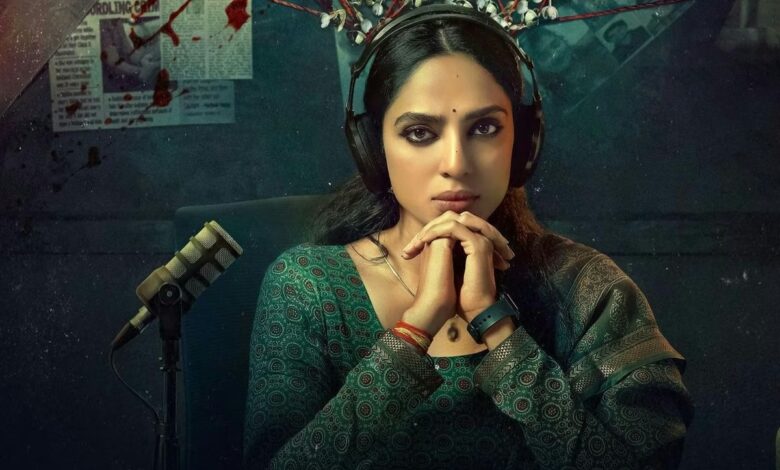
The story follows Sandhya, a crime reporter who later turns podcaster, drawn into a disturbing case following the death of someone close to her. Her professional instincts clash with her personal pain, pushing her to look beyond official narratives and uncover uncomfortable truths. This shift from mainstream journalism to independent storytelling is an interesting idea, reflecting the changing ways crime stories are consumed today. Sadly, the film does not explore this angle as deeply as it could have.
The early portions are effective in setting mood and tension. There is a sense of unease, helped by shadowy visuals and restrained background music. The atmosphere suggests that the film is building towards something complex and emotionally heavy. However, once the investigation is underway, the narrative becomes surprisingly straightforward. Leads appear with little resistance, and the mystery unfolds in a predictable manner, reducing the sense of danger and urgency.
One of the film’s biggest shortcomings lies in its writing. Characters exist largely to serve the plot rather than feel like real people. The police, in particular, are portrayed as passive observers, leaving most of the work to the protagonist. This creative choice weakens the realism and makes the investigation feel too convenient. A stronger push-and-pull between Sandhya and the system around her might have added much-needed tension.
Sobhita Dhulipala brings sincerity and restraint to her role, delivering a controlled performance that never slips into melodrama. She communicates grief and determination with subtlety, which works in the film’s favour. However, the script rarely allows her character moments of vulnerability or doubt. As a result, Sandhya feels more like a symbol than a fully formed individual, limiting the emotional connection with the audience.
The supporting cast is uneven. While a few performances stand out briefly, most characters are underdeveloped and quickly forgotten. This is particularly disappointing in a story that deals with trauma and moral responsibility, themes that benefit from strong interpersonal dynamics.
From a technical standpoint, Cheekatilo is competently made. The cinematography captures darkness without becoming visually dull, and the sound design supports the film’s sombre tone. However, style alone cannot compensate for narrative weaknesses. The pacing slows considerably in the second half, and the final act feels rushed, as though the film is eager to conclude rather than resolve its ideas.
The ending, instead of delivering impact, feels incomplete. Important motivations are glossed over, and emotional threads are tied up too quickly. What should have been a moment of reckoning instead feels like an afterthought.
Cheekatilo is a film with serious intentions but limited follow-through. It raises important questions but offers few satisfying answers. While it deserves credit for its subject matter and lead performance, it ultimately falls short of becoming the compelling thriller it aims to be, leaving viewers with a sense of unfulfilled potential rather than lasting impact.